


How much does a weighbridge cost: the factors that define the price
Anyone thinking about installing a weighbridge eventually asks the same question: how much does this equipment actually cost? It's a natural question. A truck weighbridge is a significant investment, designed to support your operation for many years. And when the first quotes start coming in, another question follows: why do the figures vary so much from one proposal to the next?
The answer lies in the details. The price of a weighbridge is the result of several choices, from the materials to the way the equipment connects to the rest of your operation. In this article, we explain what those choices are and how each one affects the final figure, so you can compare proposals with complete clarity.
In short
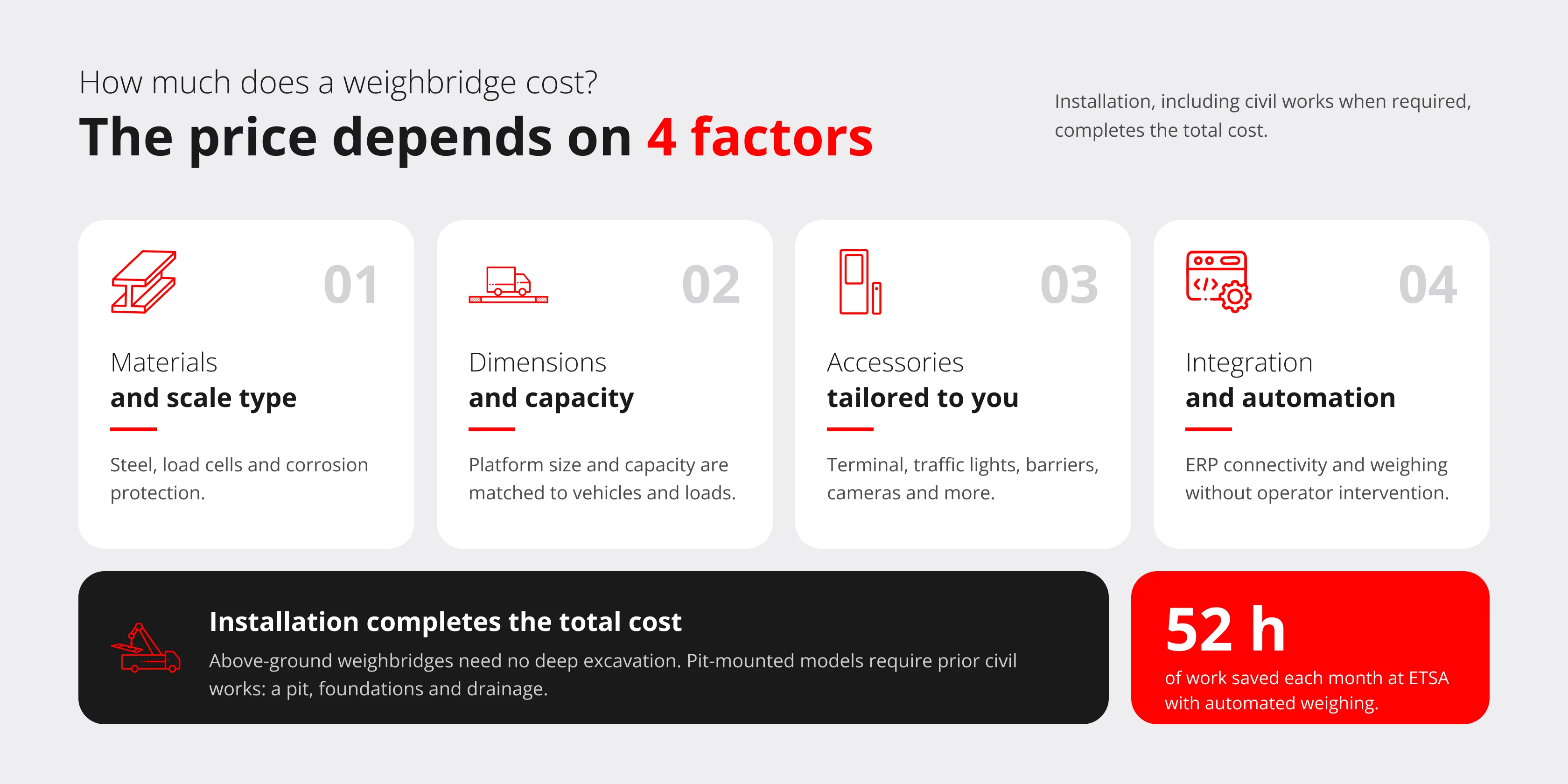
- The price of a weighbridge depends on four factors: materials and type of weighbridge, dimensions and capacity, accessories, and the level of integration and automation.
- Installation completes the picture: surface-mounted weighbridges need no deep excavation, while pit-mounted models require prior civil works.
- Automation requires more investment and gives time back: at ETSA, automatic weighing saves 52 working hours per month.
- At Balanças Marques, PCM weighbridges are 100% manufactured in Braga, installed by our own team and always supported by the manufacturer.
How much does a weighbridge cost? The short answer
The price of a weighbridge depends on four main factors: the type of weighbridge and the materials used, the dimensions and weighing capacity, the accessories that come with it and the level of integration and automation your operation needs. Installation, including civil works where required, completes the cost.
This means two weighbridges of the same size can have very different quotes. A weighbridge designed for occasional weighing, with a simple terminal, meets one need. An automatic solution, connected to the company's management software and able to weigh trucks without an operator, meets another. Both can be the right choice. It all depends on what your business needs.
Materials and type of weighbridge: the basis of the budget
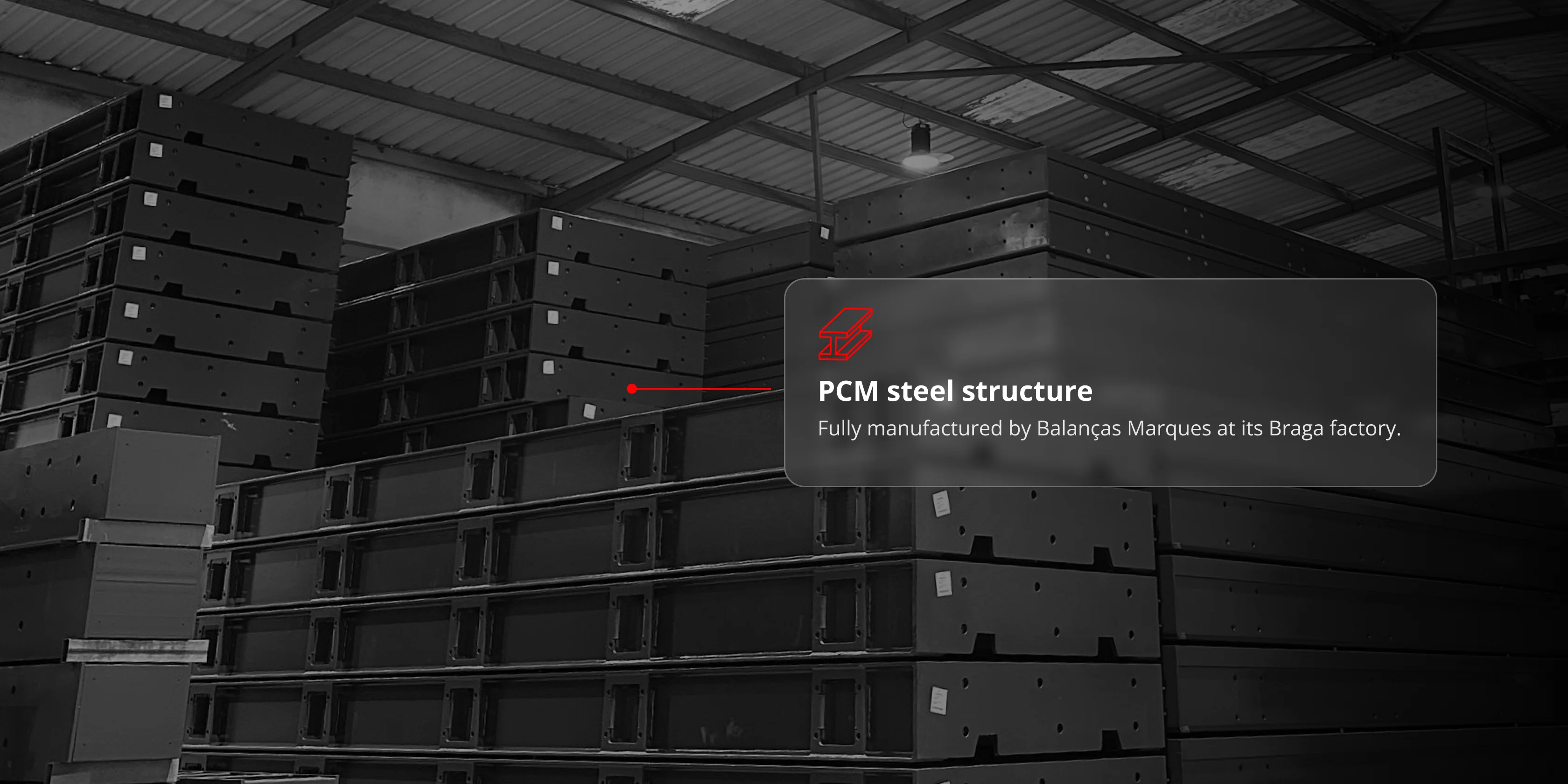
The structure is the starting point. Some weighbridges have an all-steel platform, while others have a concrete deck on a steel structure. The quality and thickness of the steel, the structural design and the surface treatment (paint, galvanising or other corrosion protection) have a direct impact on price. They also make a difference to durability, especially in demanding environments such as quarries, coastal areas or industries that handle chemicals.
Load cells are another key component. The number of cells, the technology (analogue or digital) and the level of protection against water and dust all affect the budget, as well as the reliability of weighing over time.
Then there are the dimensions. The platform length has to match the vehicles being weighed, and the maximum capacity has to be up to the loads. A weighbridge for large articulated trucks requires more structure, more load cells and more material.
Finally, the type of installation. Surface-mounted weighbridges sit on a level base and need no deep excavation. Pit-mounted and semi-pit-mounted weighbridges sit at ground level and require prior civil works, with a pit, foundations and drainage. This choice affects the total cost and the timeline, as we explain in our article on how long a weighbridge installation takes.
- Surface-mounted: level base, no deep excavation. Lower civil works cost. Best suited to fast installations and sites where excavation is not possible.
- Semi-pit-mounted: partial excavation and drainage. Intermediate budget impact. Best suited to sites with limited space for access ramps.
- Pit-mounted: pit, foundations and drainage system. Higher civil works cost. Best suited to high-traffic areas, with the weighbridge at ground level.
Accessories: a weighbridge tailored to your operation
A weighbridge rarely works on its own. Around the platform, a set of accessories makes weighing faster, safer and simpler for the people who use it every day.
The most common include the weighing terminal (where the operator checks and records each weight), the ticket printer, a large-format remote display for the driver, traffic lights and barriers that manage vehicles coming in and out, side guide rails that keep trucks correctly positioned and cameras that document every weighing.
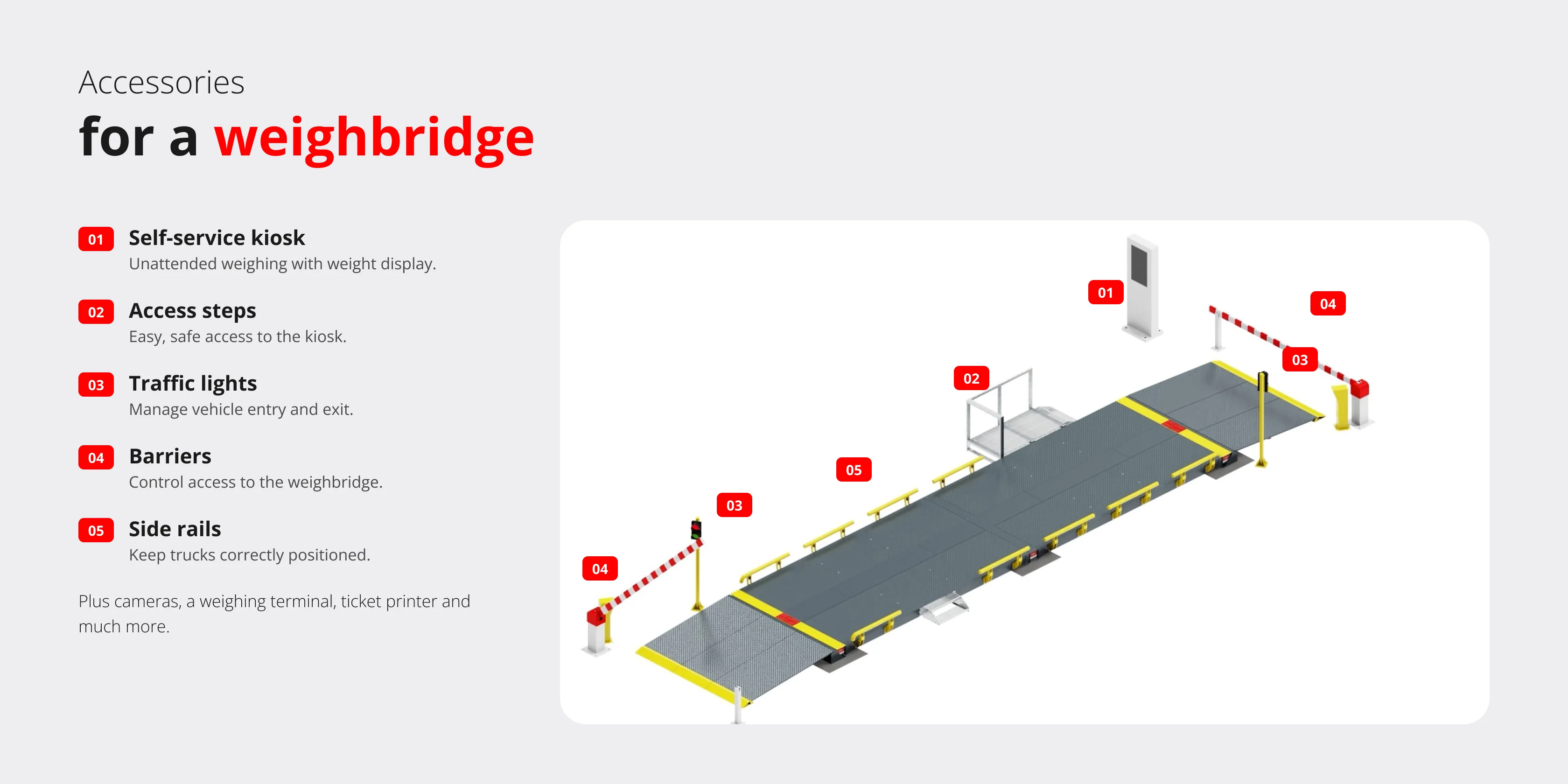
Each accessory adds to the budget. In return, it solves a specific day-to-day problem: queues at the entrance, badly positioned trucks, doubts about a record. That's why the best configuration is always the one that meets the real needs of your operation, with nothing superfluous and nothing missing.
Integration and automation: when the weighbridge connects to the rest of the business
This is where price differences can be greatest. It is also where the return on investment tends to be most visible.
A weighbridge can work as a standalone unit, with records kept by the operator. It can also be integrated with the company's management software, such as the ERP, so that each weighing is automatically linked to the customer, the product, the delivery note or the invoice. And it can work autonomously with automatic number plate recognition, ID cards or self-service kiosks, which allow trucks to be weighed without an operator, at any time of day.
At ETSA, for example, we installed six PCM weighbridges with camera-equipped kiosks and the QTRUCK weighing software. Previously, each weighing took around 10 minutes and the operator had to walk to the truck twice. Today, recording is automatic and the company saves 52 working hours per month. At the Ferro branches of the Ferpinta group, integration with automatic number plate detection also made it possible to compare the invoiced weight with the actual weight of each load.
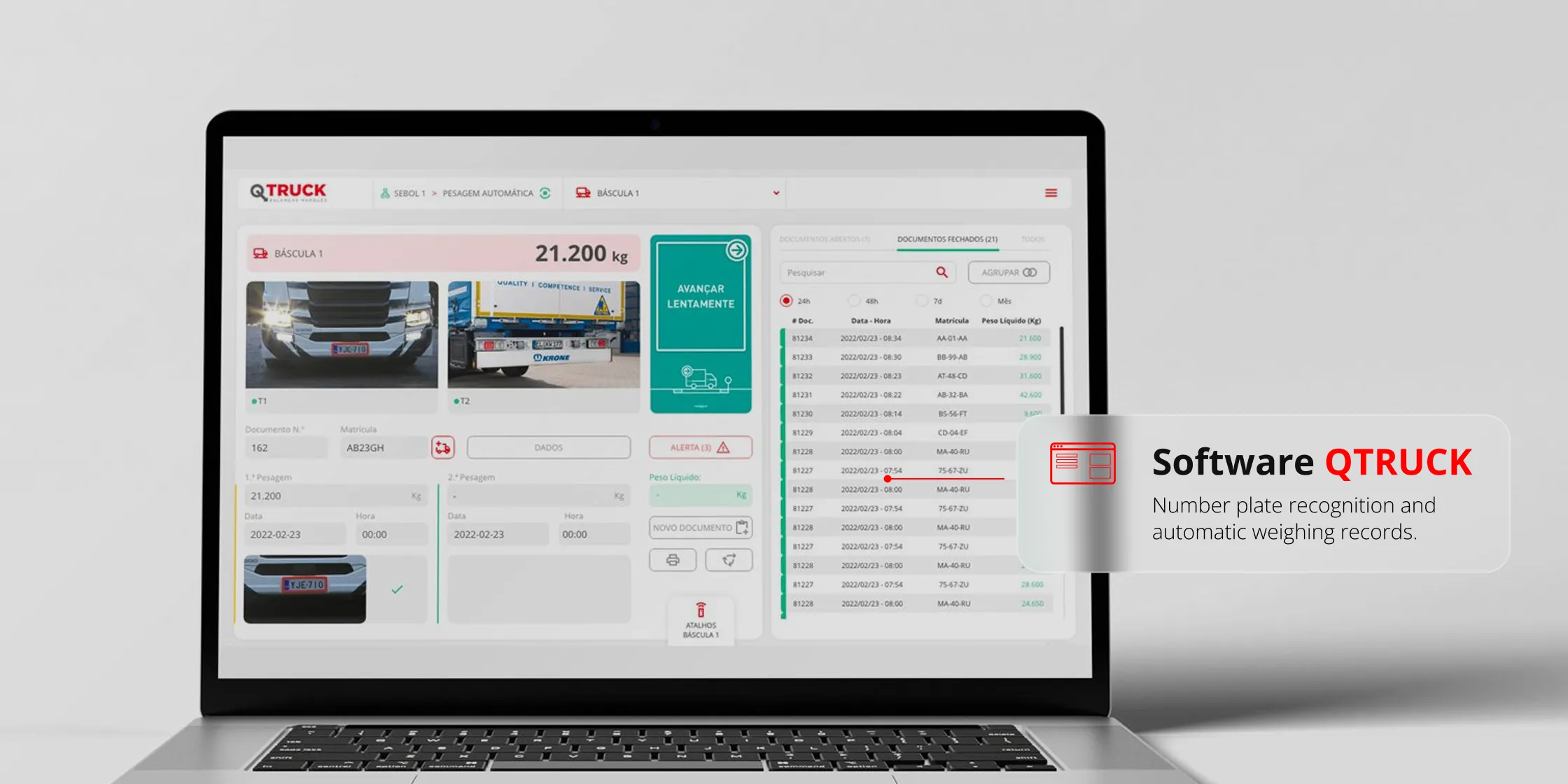
“I would definitely recommend Balanças Marques! The automatic weighing system increases productivity and gives us greater traceability of the process.”
— João Borga, Technical Management Advisor, ETSA
These solutions require more development and, therefore, a different level of investment. In return, they mean less time per truck, fewer manual errors and more reliable data to support decisions.
- Essential (€): weighbridge, weighing terminal and ticket printer. For occasional weighing, with an operator on site.
- Intermediate (€€): Essential + remote display, traffic lights, side guide rails and weighing management software. For a regular truck volume and a need for organised records.
- Automatic (€€€): Intermediate + automatic number plate recognition, self-service kiosks, barriers and ERP integration. For operations with many trucks a day or unattended weighing.
What to consider when comparing quotes
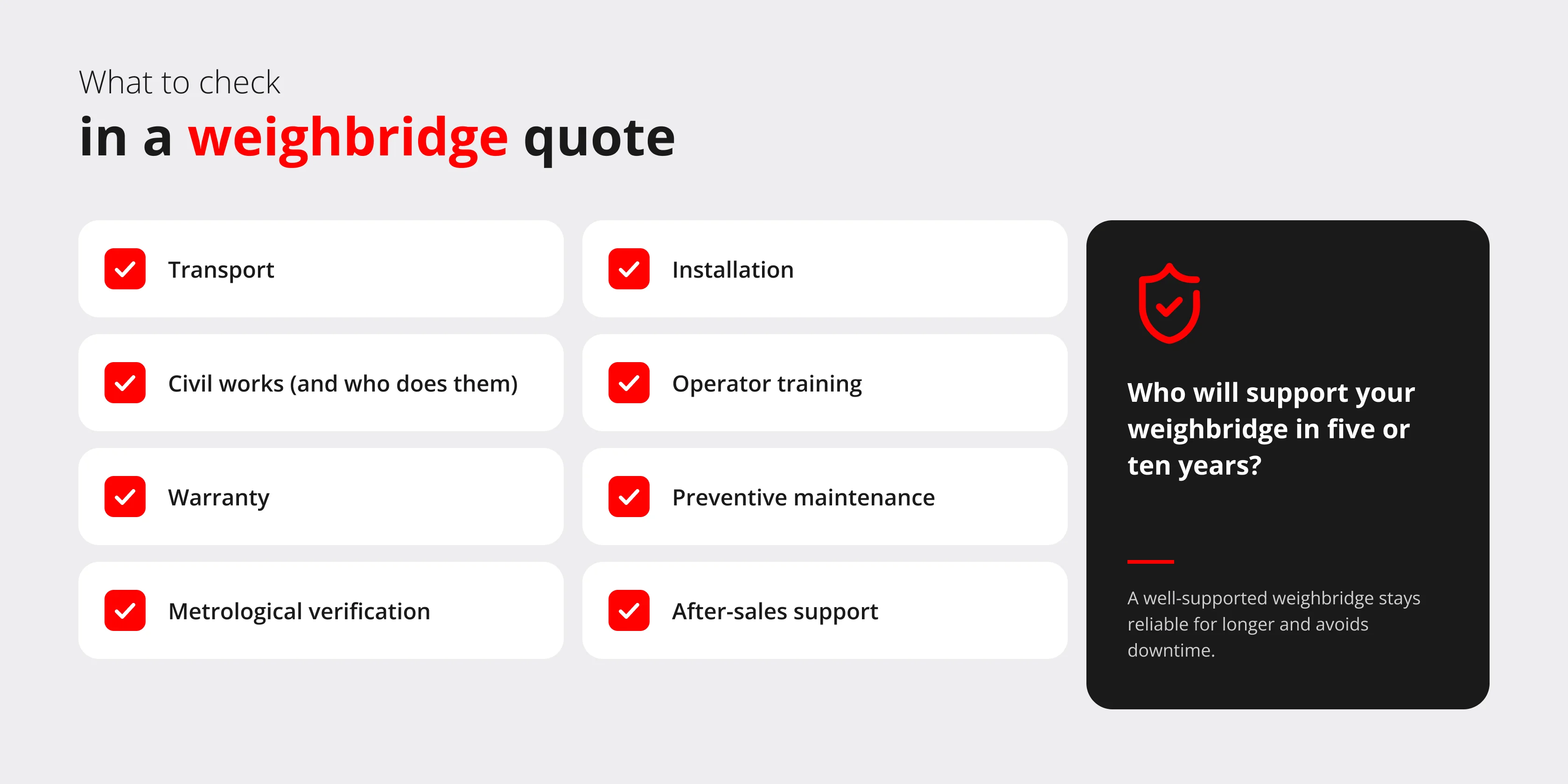
When reviewing proposals, it pays to understand everything each one includes. Transport, installation, civil works (and who carries them out), operator training, warranty and preventive maintenance are all part of the investment. It is also worth considering the periodic metrological verifications that, in many countries, apply to weighbridges used in commercial transactions.
And there is one question that makes all the difference: who will support your weighbridge in five or ten years' time? A well-supported weighbridge stays reliable for longer and avoids downtime that costs far more than any preventive intervention. If you want to know how to extend the life of your equipment, take a look at our tips on weighbridge care.
Balanças Marques weighbridges: made, installed and supported by us
At Balanças Marques, every weighbridge in the PCM range is 100% manufactured by us, in Braga. From engineering to the steel structure, from electronics to software, the entire manufacturing process happens in-house. This gives us full control over the quality of every component and the freedom to adapt each piece of equipment to what the customer needs. That is how we developed, for Granfer, a 60-tonne weighbridge powered solely by a solar panel, on a site in the Alentejo with no access to the power grid.
Installation is carried out by our own technical team, who know every weighbridge inside out. On site, the equipment can be assembled in as little as 8 hours, depending on the model and the ground conditions.
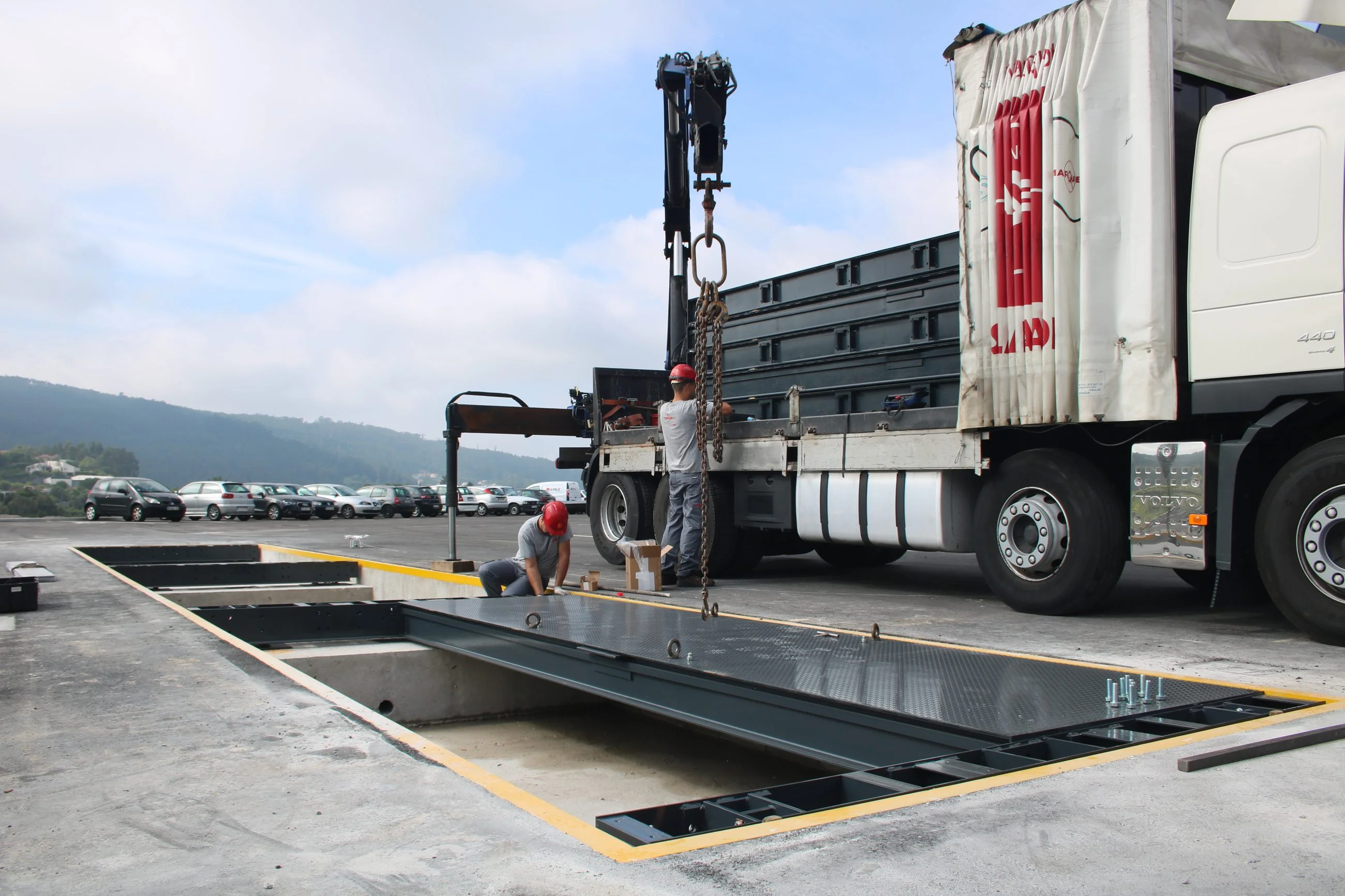
After installation, we're still there. All our weighbridges come with direct support from the manufacturer, including technical assistance, maintenance and original spare parts. Whenever you have a question or need an intervention, you speak to the people who designed and built your equipment.
That's more than 50 years of experience in the weighing sector, also recognised internationally: at the Weighing Review Awards 2026, Balanças Marques was named the best weighing company in the world and received the title of best truck scale.
Request a proposal tailored to your operation
The price of a weighbridge depends on the materials, dimensions, accessories, level of integration and automation, and installation conditions. The best-value proposal is the one that meets the real needs of your operation and guarantees support throughout the equipment's entire service life.
Perguntas frequentes
Encontre respostas às perguntas mais frequentes.