


How to choose an industrial scale: 5 essential criteria
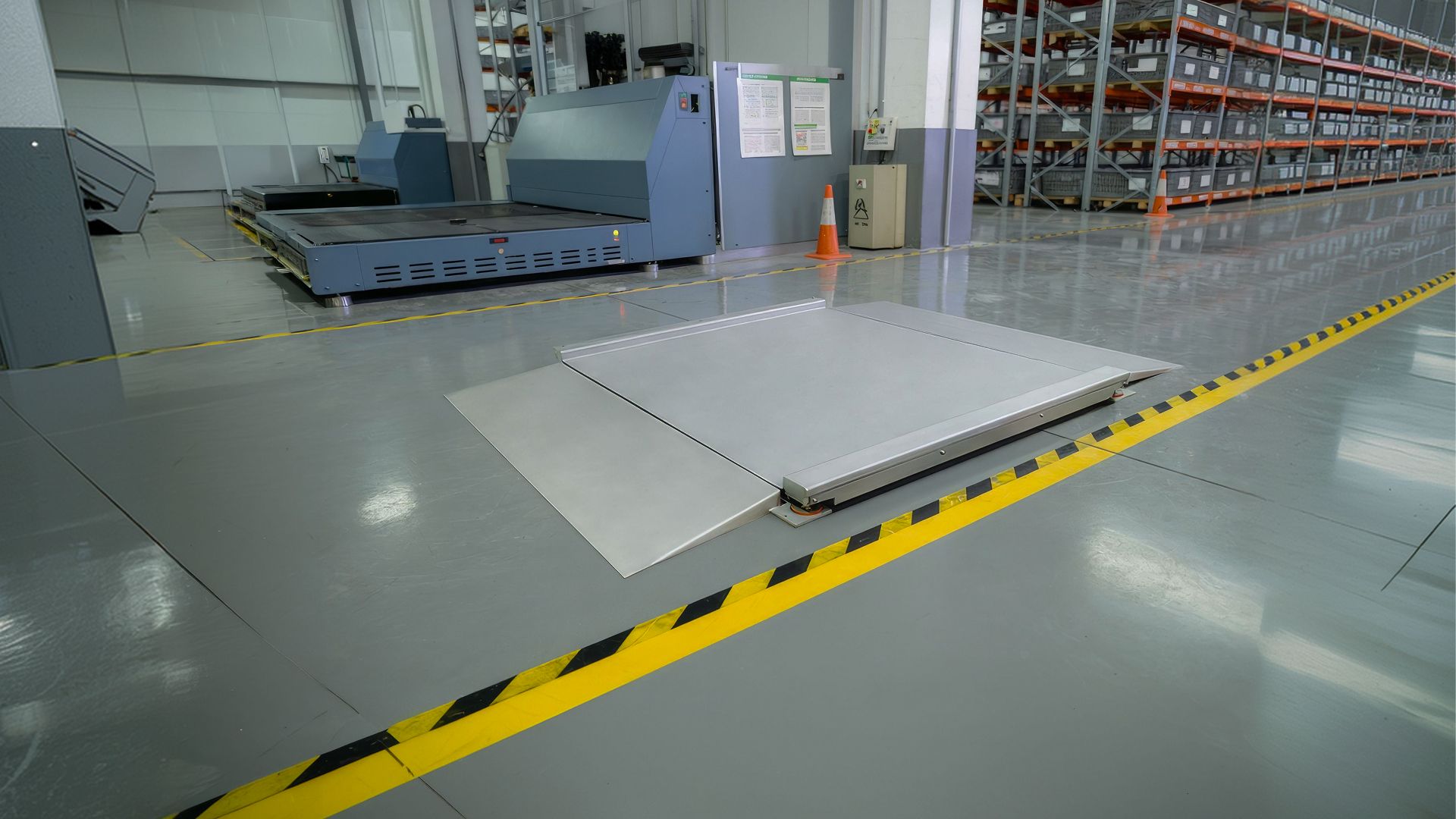
At first glance, industrial scales may all seem the same. After all, they all serve the main purpose of weighing and counting items in your industry, whether in food, logistics and transport, metalworking, or the chemical sector.
However, every industrial scale hides many features that set it apart from the rest, and that make it (or not) the ideal choice for weighing and/or counting the type of products in your industry.
In this article, Balanças Marques' experts help you understand the five criteria that should really weigh into your decision:
- Capacity and division suited to the operation
- Legal compliance and CE Certification
- Robustness and protection rating for the industrial environment
- Integration with ERP and other software
- Warranty and after-sales support
Learn more about each one below.
1. Capacity and division: the first decisive criteria
The first common mistake is choosing an industrial scale or weighing platform based only on the maximum capacity it can support, without considering the precision you lose as a result. An industrial scale sized for loads far above what you'll actually weigh day to day tends to be less sensitive to the weight variations that really matter for your process and for weighing your products.
The best approach is to analyse the typical weighing range of your operation and choose equipment whose nominal capacity covers that range with some margin, without overdoing it. This ensures the scale's division, meaning the smallest weight increment it can register, stays appropriate for the precision your business requires.
2. Legal compliance and CE Certification: no, it's not just a detail
If your industrial scale is used in commercial transactions, it needs to read within the legally defined tolerance. This goes well beyond choosing a scale or platform with just any certificate: it means confirming that the model complies with the applicable metrological legislation and that there's a way to demonstrate that compliance whenever needed, meaning that the scale carries CE Marking.
Ignoring this criterion can mean fines, but it can also mean wrong decisions made on the basis of unreliable weighing.
3. Robustness and IP protection ratings: not to be overlooked in industrial environments
The factory floor, the warehouse or the production line are demanding environments. Dust, humidity, vibration, temperature swings and intense daily handling put any equipment to the test. A scale or weighing platform designed for an office or retail setting rarely holds up under the same conditions.
It's worth understanding the protection rating of the equipment, the material of the structure and weighing platform, and whether the manufacturer has proven experience supplying solutions for your type of environment. A scale poorly suited to real working conditions results in frequent breakdowns, unplanned downtime and maintenance costs that quickly outweigh the initial savings.
4. Communication with ERP and other software: assess the integration
More and more companies are integrating their industrial scales with management software, ERP systems or traceability programs. Before deciding, ask yourself whether your current process, or the one you plan to implement, requires that communication between equipment.
A scale or platform with peripheral connectivity, configurable data outputs or compatibility with software saves time and reduces manual recording errors. If this integration isn't a priority right now, it's worth checking whether the equipment you choose allows for that evolution later, without forcing you to replace the entire investment.
5. Warranty and after-sales support: the factor you can't overlook
Your relationship with your weighing equipment supplier doesn't end at the delivery of the scale or platform. Available spare parts, technical support with response times suited to your reality and maintenance contracts are all part of what you should evaluate before closing the deal.
A well-chosen industrial scale without proper technical support ends up generating the same kind of problems it was meant to avoid in your industry. Ask the supplier how after-sales follow-up works and what timeframes they apply in case of a breakdown.
Other questions and answers that can help you choose an industrial scale
These are some of the questions our team is often asked about choosing an industrial scale or weighing platform. Today we answer all of them so you can clear up any doubts before making a decision.
What's the difference between a scale and a weighing platform?
In practice, the terms are often used interchangeably. A “weighing platform” tends to refer to higher-capacity, floor-standing equipment, while “scale” is the more general term. What matters isn't the name, but choosing equipment with the right capacity, division and robustness for your operation.
What is the division of an industrial scale?
The division is the smallest weight increment the scale can register (for example, 5 g, 50 g or 500 g). The smaller the division, the higher the resolution. It has to be appropriate for the capacity and the type of product being weighed. A poorly matched division compromises the precision the process requires.
Does an industrial scale need CE Certification?
If it's used in commercial transactions (selling by weight, invoicing by quantity), it needs to comply with the applicable metrological legislation and demonstrate that compliance. In the European Union, CE Certification and periodic metrological verification are the requirements that guarantee the weighing is legally valid.
What IP protection rating should an industrial scale have?
The protection rating indicates resistance to solids and liquids, and it's decisive for durability on a factory floor or in a warehouse. So the answer is: it depends on the environment. In locations with dust, humidity, splashing or frequent washdowns, look for higher protection ratings (for example, IP65 or above).
Can an industrial scale integrate with my management software/ERP?
Yes. Many pieces of equipment offer configurable data outputs and connectivity to peripherals or to management/ERP software, reducing manual recording errors. If it's not a priority yet, it's worth choosing equipment that allows for that evolution later, without replacing the entire investment.
In summary: the 5 criteria for choosing the right industrial scale
Choosing an industrial scale means looking beyond the purchase price and the spec sheet. Appropriate capacity, legal compliance, robustness for the environment it will work in, integration capability and after-sales support are the criteria that, together, determine whether the scale will really meet your business's needs.
At Balanças Marques, we help companies across different industry sectors, from metalworking to food, identify the right equipment for each operation, backed by decades of rigour and experience in the weighing industry.
Get in touch with our team and find the industrial scale that fits your reality.