


Pit-mounted vs surface-mounted weighbridge: what sets them apart and how to choose
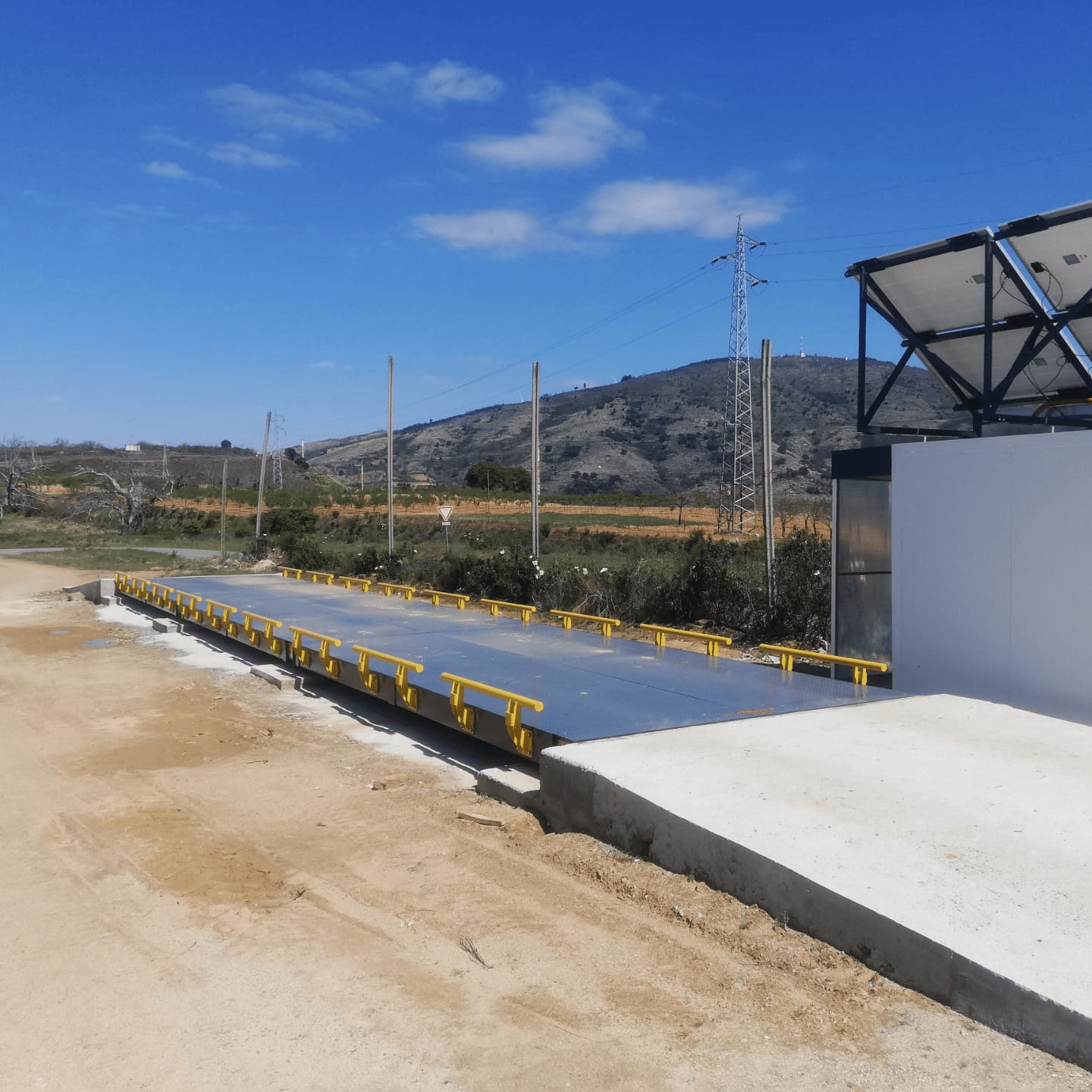
Anyone investing in a weighbridge sooner or later reaches a crossroads: install the equipment flush with the ground or place it on the surface, with access ramps? It may seem a purely technical choice. In practice, it affects the space it will take up, the investment in groundwork, how trucks move around your site and even maintenance in the years ahead.
Both a pit-mounted and a surface-mounted weighbridge can weigh trucks with the same reliability. What sets them apart is how they fit into the site and into your company’s daily routine.
In this article, we explain the differences between the two types of installation, the benefits of each and the criteria that will help you work out which makes most sense for your business.
What sets a pit-mounted weighbridge apart from a surface-mounted weighbridge
The main difference lies in the position of the weighing platform.
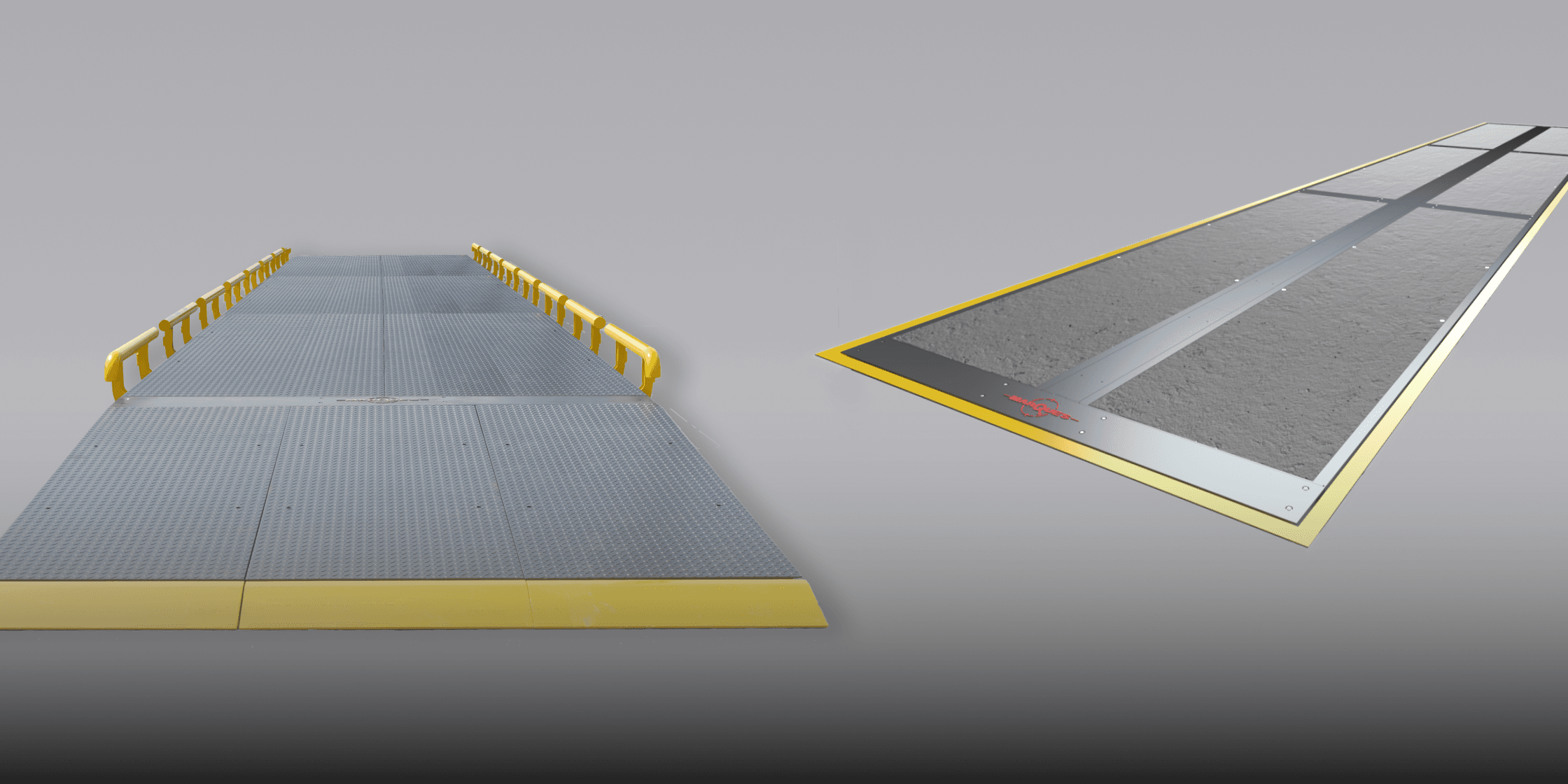
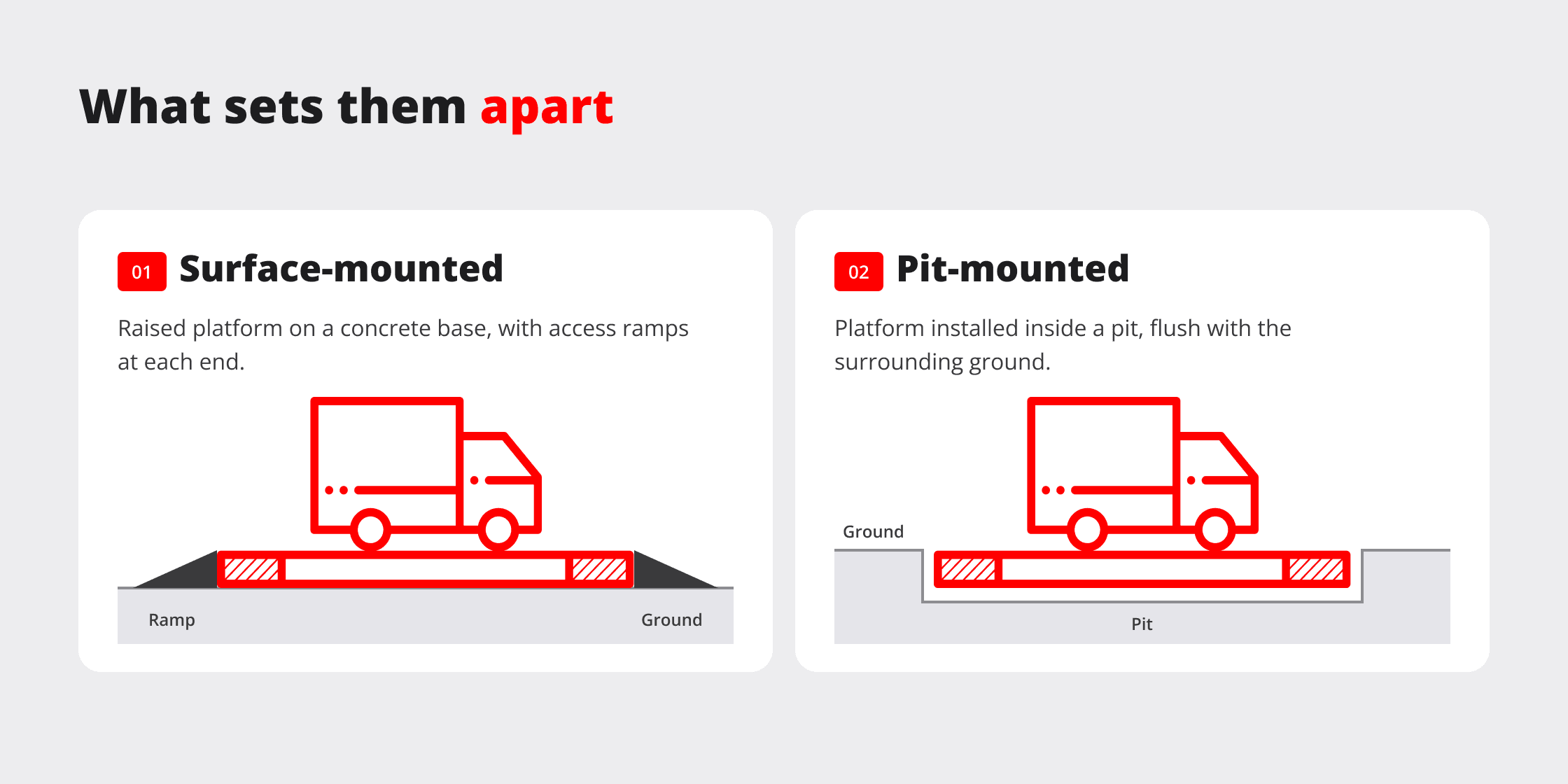
On a surface-mounted weighbridge, the platform sits directly on a level concrete base, slightly raised above the surrounding ground. Trucks drive on and off via steel or concrete ramps placed at each end.
On a pit-mounted weighbridge, the platform is installed inside a pit so that it sits at the same height as the surrounding surface. The vehicle drives on and off with no change in level, as if it were travelling along an ordinary road.
This difference in position, simple as it may seem, has consequences on several fronts: civil works, use of space, traffic flow, drainage and access for maintenance.
What are the benefits of a surface-mounted weighbridge and a pit-mounted weighbridge
Surface-mounted installation
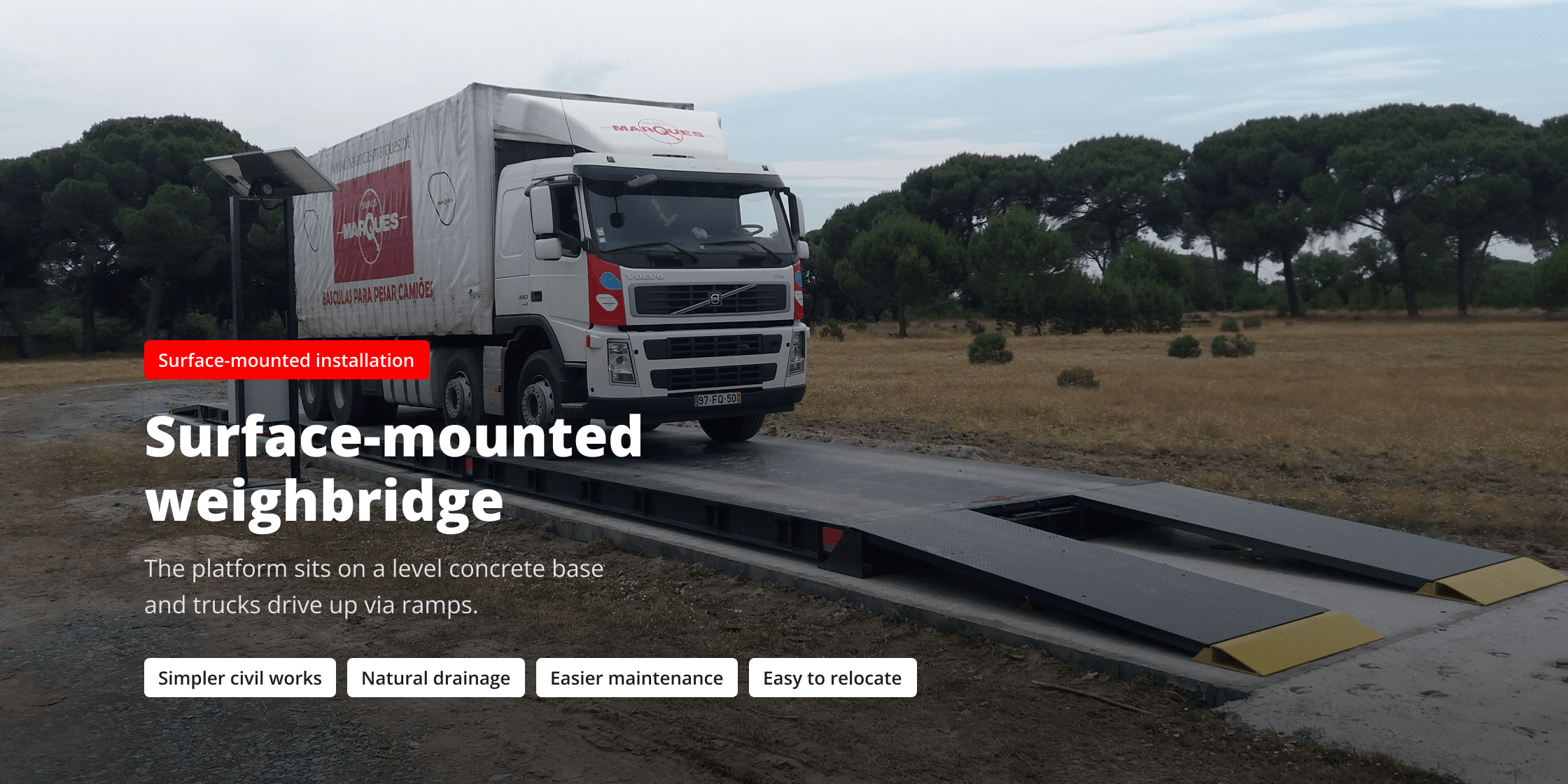
Surface-mounted installation is often the most practical option for those looking for a quick solution with a lower initial investment. Since no deep excavation is needed, the civil works come down to a well-levelled concrete base designed to bear the loads. This cuts costs, shortens lead times and reduces dependence on contractors and weather conditions.
Drainage is another clear advantage. With the platform raised, rainwater, mud and debris drain away naturally, without building up underneath the equipment. On sites with a high water table, rocky ground or areas prone to flooding, this can be decisive.
Maintenance is also easier. The load cells and structural components are more accessible, making cleaning and routine inspections simpler and quicker.
Finally, a surface-mounted weighbridge offers greater flexibility for the future. If the company relocates or reorganises its site, the equipment can be dismantled and reinstalled elsewhere with relative ease.
The main point to consider is space. Access ramps add to the overall length of the installation, and trucks need to approach in line with the platform, which calls for manoeuvring space at both entry and exit.
Pit installation
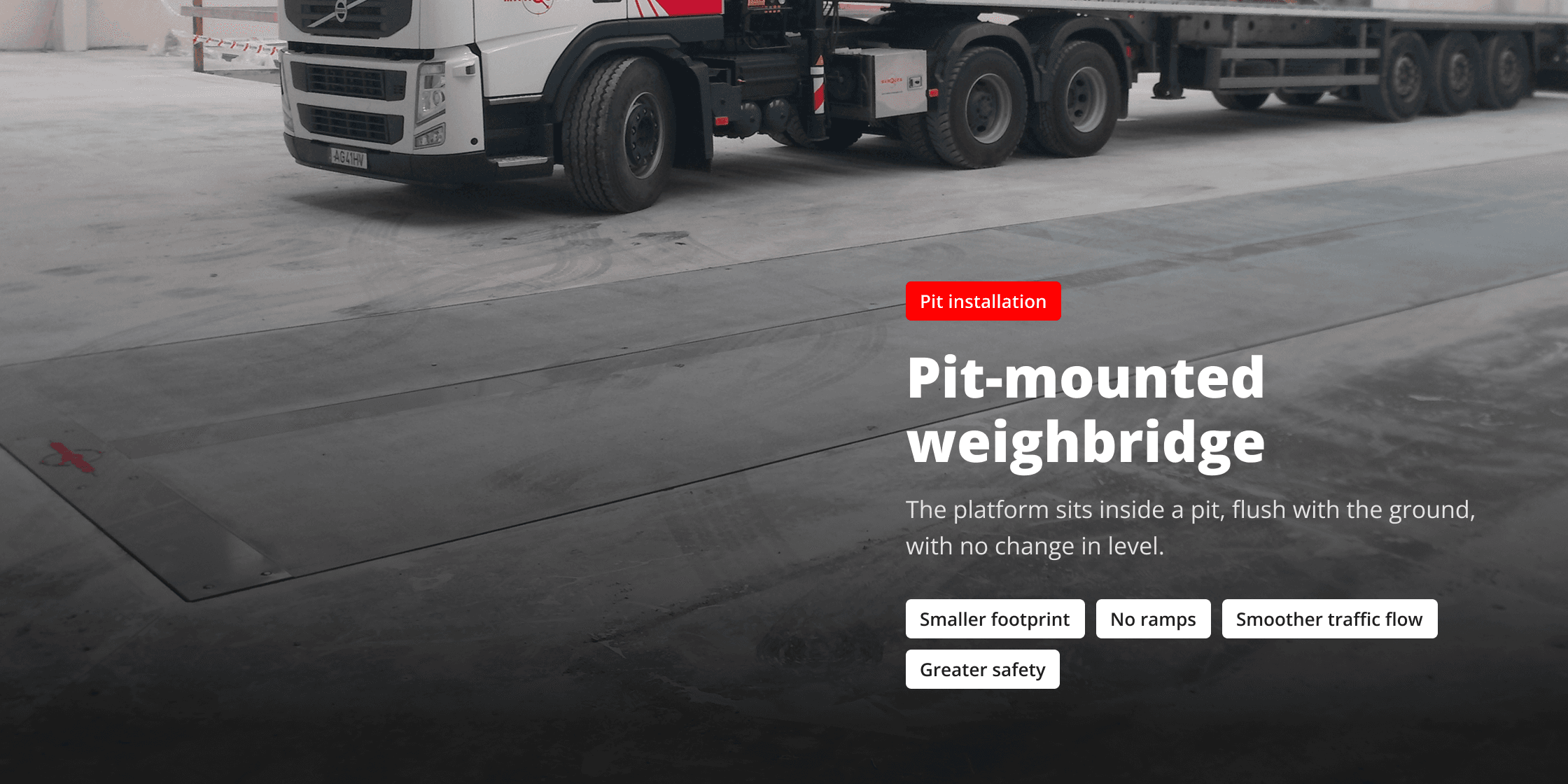
A pit-mounted weighbridge stands out above all for how well it blends into the site. Because it sits flush with the ground, it needs no ramps and takes up only the area of the platform itself. On sites with limited space or heavy traffic, the metres saved can make all the difference.
The absence of a level change also makes traffic flow more smoothly. Vehicles can access the platform more freely, with no ramps to climb, which reduces strain on the trucks and speeds up throughput in operations with many weighings a day. In some cases, the weighbridge can even form part of a normal traffic lane, with other vehicles driving across it when it is not being used for weighing.
There are also aesthetic and safety gains: an installation flush with the ground looks neater and removes the risk associated with ramps, particularly for low vehicles or pedestrians moving around the area.
On the other hand, pit installation requires prior civil works (excavating the pit, foundations and a drainage system), which increases the initial investment and the time until the equipment is up and running. The pit also tends to collect water and debris, so the drainage system should be checked regularly, ideally before the rainy season, to keep weighing free from interference.
How to choose between a pit-mounted and a surface-mounted weighbridge
Between a surface-mounted and a pit-mounted weighbridge, no single option is universally better. There is, however, an option best suited to your context. To find it, it is worth taking the time to look at the following factors.
Available space
If the site is tight or the weighing area is on a through route, a pit-mounted weighbridge makes better use of every metre. If there is enough room for ramps and manoeuvring, a surface-mounted installation is perfectly viable.
Ground conditions
Rocky ground, high water tables or areas where water tends to collect make excavation more complex and costly. In these cases, a surface-mounted weighbridge is usually the most sensible choice.
Type and volume of traffic
Operations with many daily weighings, trucks moving in several directions or the need to integrate the weighbridge into the site’s normal traffic flow benefit from the smoothness of a pit installation.
Budget and lead times
If the goal is to have the equipment up and running quickly with a lower investment in civil works, a surface-mounted installation has the edge.
Future plans
If there is a chance you will move premises or reorganise the space in the coming years, the mobility of a surface-mounted weighbridge could save you money later on.
Maintenance
Think about who will look after the equipment and how often. A surface-mounted weighbridge makes it easier to reach the components, while a pit-mounted one calls for closer attention to pit drainage.
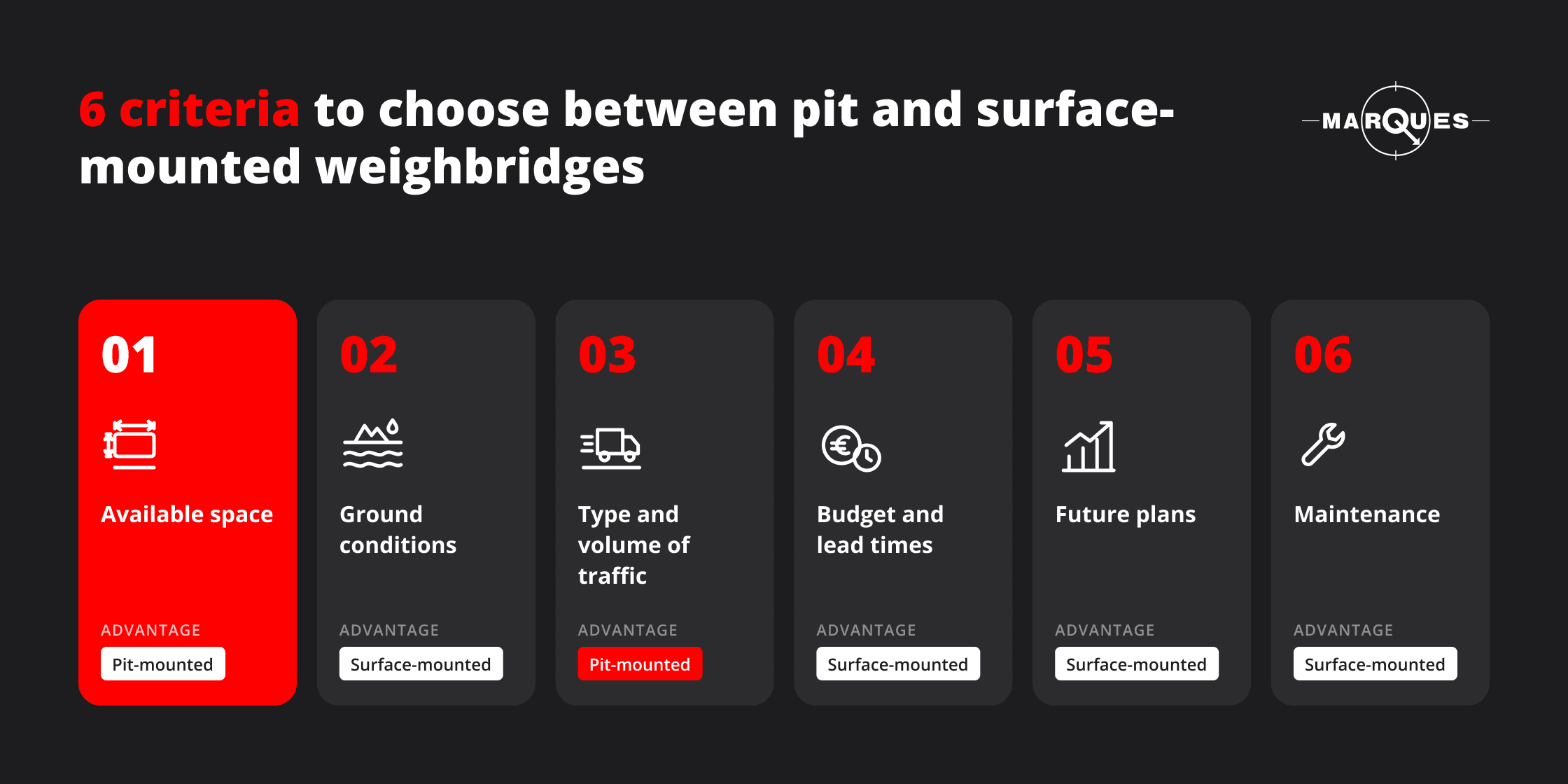
In most cases, the decision comes down to balancing these factors. That is why, as truck weighing specialists, we recommend a technical and commercial site visit to assess the ground, vehicle flow and the real needs of the operation.
PCM M1500e CO weighbridge: one model, two ways to install
At Balanças Marques, we know that every business has its own particularities. With that in mind, we developed the PCM M1500e CO weighbridge, available in both surface-mounted and pit-mounted versions, with the same robust structure and the same truck weighing performance.
The PCM M1500e CO is made up of standardised steel-concrete modules, with the concrete poured at the factory. This modular construction allows platforms of up to 30 metres long and 3 metres wide, with capacities of 30 or 60 tonnes depending on the size chosen. The structure was computer-designed using finite element analysis and fully robot-welded, resulting in a compact, sturdy unit built for intensive use.
PCM M1500e CO surface-mounted
Designed for those looking for a simple, quick and cost-effective installation. The platform sits on a level base and is accessed via ramps. Thanks to the low bridge height (240 mm), the ramps stay short and trucks drive on smoothly. Top covers give access to the load cells for cleaning and maintenance, with no need to lift the platform.
PCM M1500e CO pit-mounted
Ideal for those who want a weighbridge fully integrated into the ground, with no ramps and free-flowing traffic. Its compact structure allows it to be installed in a pit just 300 mm deep, making the civil works considerably lighter than with traditional pit-mounted solutions. The result is a flush installation that saves space and suits sites with heavy traffic.
In both versions, assembly is quick: the load cells and mounting system arrive factory-fitted, the cabling comes ready and all operations are carried out from the top of the platform. Fewer bolts, less time on site and a faster route to the first weighing.
Pit-mounted vs surface-mounted weighbridge: for those still undecided
If you are still unsure which version best suits your space, our team can help you decide. We look at the ground, traffic volume and the needs of your operation with you, and present a proposal tailored to your situation.
Request your quote now for a Marques weighbridge, in the surface-mounted or pit-mounted version, using the form on the product page.
Join the hundreds of companies that already trust our truck weighbridges, such as ETSA, Navigator, Ferpinta, Nestlé and many more.
With over 50 years of experience in weighing, Balanças Marques supports you from choosing the equipment through to installation and maintenance, so your weighbridge is always ready to weigh trucks and keep pace with your business.