


Scale capacity and division: what they are and how to choose
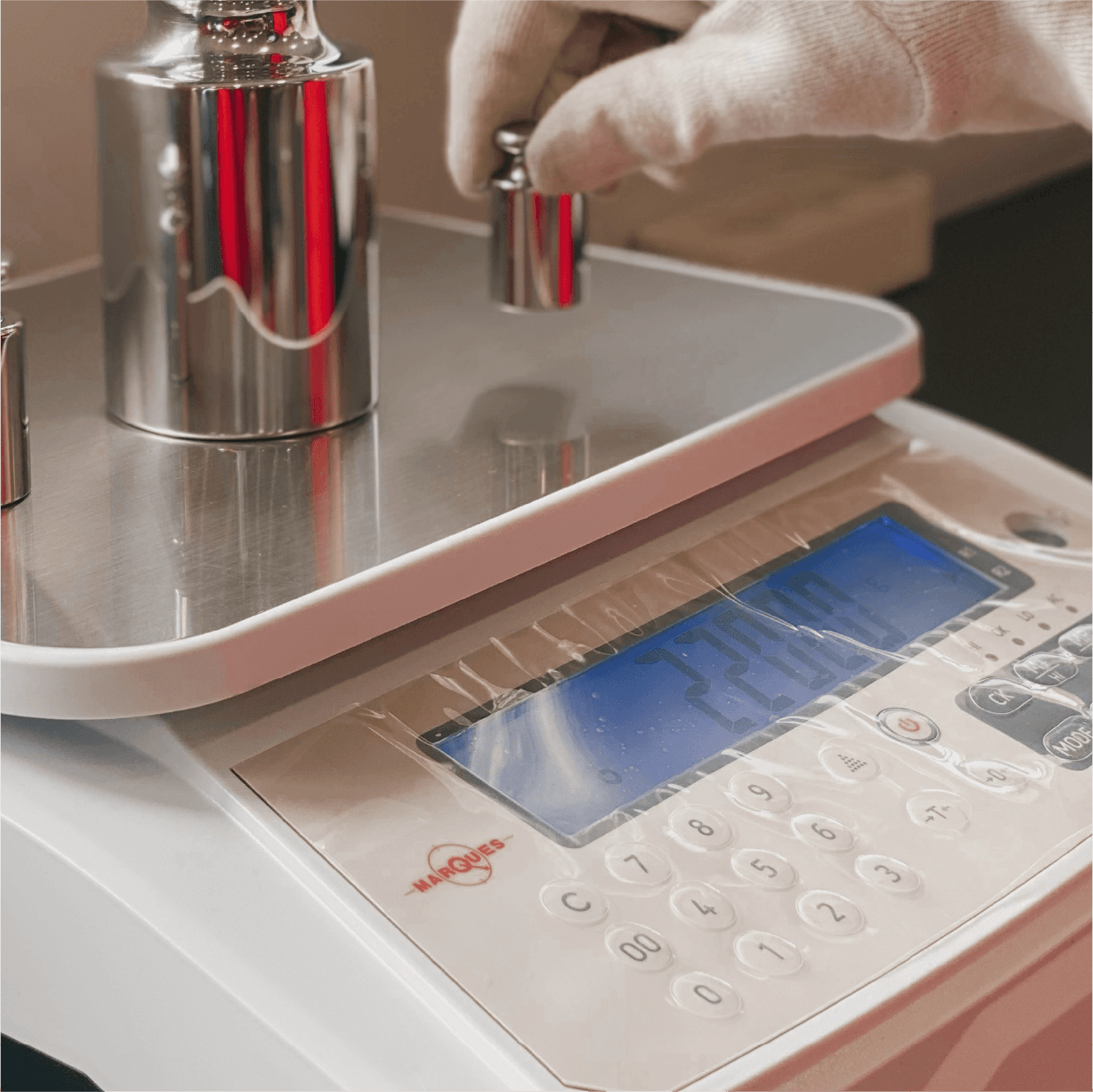
When choosing a scale, there are two technical specifications you should understand before anything else: capacity and division. Together, they determine how much weight the scale can handle and how precisely it displays the result.
In this article, the Balanças Marques experts explain what each of these concepts means, how to find them on the data sheet and how to choose the right combination for your business.
Scale capacity and division: the quick answer
- Capacity (Max): the maximum weight the scale can weigh. It is also known as maximum capacity or range.
- Division (e or d): the smallest weight increment the scale shows on the display. A 5 g division means the scale weighs in steps of 5 grams.
- Minimum capacity (Min): the weight above which a weighing is considered metrologically valid.
- How they relate: the higher a scale's capacity, the larger its division tends to be. That is why you should choose a balance that suits what you need to weigh.
What is the capacity of a scale?
Capacity, also called maximum capacity or range, is the maximum weight a scale can measure. On the data sheet and on the equipment's identification plate, it is usually shown as Max.
For example, a scale with a 15 kg capacity can weigh products of up to 15 kg. Above that value, it no longer shows a valid result and usually displays an overload message.
What happens if you exceed the scale's capacity?
Placing a load heavier than the scale's capacity doesn't just compromise the weighing result. It can also damage the load cell, the component that converts weight into an electrical signal, and shorten the equipment's service life.
So, when choosing a scale, consider the maximum weight of the items you weigh day to day and allow for a safety margin. But don't overdo it, as you'll see further on.
And what is the minimum capacity (Min)?
As well as a maximum capacity, scales also have a minimum capacity, shown as Min. Below this value, the relative weighing error is too high for the result to be considered reliable. On class III scales, the most common in retail, the minimum capacity usually corresponds to 20 divisions.
What is the division of a scale?
The division is the smallest weight increment the scale can show on its display. It is directly linked to how detailed the weighing is: the smaller the division, the finer the result.
In practice, if a scale has a 5 g division, it weighs in steps of 5 grams. In other words, the display shows values such as 1.000 kg, 1.005 kg or 1.010 kg, but never 1.002 kg.
Actual division (d) and verification division (e): what's the difference?
On the data sheet, you may find two different values: the actual scale division (d), which is the increment the scale shows on the display, and the verification scale interval (e), which is the value used for metrological verification and to define the maximum permissible errors. On scales approved for trade use, these two values are usually the same.
Are division and accuracy the same thing?
Not exactly. The division indicates the scale's resolution, that is, the level of detail with which weight is displayed. Accuracy also depends on other factors, such as the scale's accuracy class, its calibration and the conditions of use. A scale with a small division that is poorly calibrated may give unreliable results.
How are capacity and division related?
Capacity and division always go hand in hand. If you divide the capacity by the division, you get the scale's number of divisions, a figure that helps you understand its resolution and accuracy class.
For example, a scale with a 15 kg capacity and a 5 g division has 3,000 divisions (15,000 g ÷ 5 g). Class III scales, used in retail, can have up to 10,000 divisions.
That is why a scale with a capacity far higher than you need will generally have a larger division. It gains capacity but loses detail on lighter weighings.
What are multi-interval scales?
To balance these two characteristics, many retail scales have more than one weighing range, each with its own division. Take a 6/15 kg scale with a 2/5 g division:
- Up to 6 kg, it weighs in steps of 2 grams;
- From 6 kg to 15 kg, it weighs in steps of 5 grams.
This way, you can weigh lighter products in greater detail without giving up the capacity for heavier ones.
How to choose the right capacity and division for your business
There is no single combination that suits every business. The choice always depends on what you weigh and how precise that weighing needs to be. Before deciding, answer these four questions:
- What is the heaviest item you will weigh? Choose a capacity that covers your heaviest items with some margin, without oversizing.
- What is the lightest item you will weigh? Make sure it is above the scale's minimum capacity (Min).
- How much detail do you need? If every gram counts, go for a smaller division.
- Will the scale be used to sell by weight? If so, it must be approved and verified for trade use, in line with the applicable .
Some practical examples
- In a butcher's, greengrocer's or fishmonger's, with a 6/15 kg capacity and a 2/5 g division cover most counter weighings.
- In a pastry shop or spice shop, where small quantities of high-value products are weighed, a scale with a lower capacity and a finer division may make sense.
- In industry or a warehouse, where loads of hundreds of kilos are weighed, offer higher capacities and divisions suited to that range. Find out more about .
Frequently asked questions about scale capacity and division
Are capacity and range the same thing?
Yes. Both terms refer to the maximum weight the scale can weigh, shown on the data sheet as Max.
What does “Max 15 kg, e = 5 g” mean on a scale?
It means the scale weighs up to 15 kg and displays weight in 5-gram increments.
What is a 6/15 kg scale?
It is a scale with two weighing ranges: one up to 6 kg and another up to 15 kg. Each range usually has a different division, for example 2 g and 5 g.
Does a smaller division always mean a better scale?
Not necessarily. A smaller division gives more detail, but it is only an advantage if your process needs it. What matters most is choosing a scale suited to the products you weigh and making sure it is calibrated and verified.
Where can I find my scale's capacity and division?
On the data sheet and on the equipment's identification plate, usually near the display. Look for the Max, Min, e and d values.
In short: scale capacity and division
Capacity tells you the maximum weight a scale can weigh. Division tells you how much detail that weight is displayed with. Choosing the right combination of the two is the first step towards accurate weighing that suits your business.
Want to keep exploring weighing concepts? Read also what tare weight is and the difference between net weight and gross weight.
At Balanças Marques, we help retail and industrial businesses choose the right weighing equipment for every operation. Talk to our team and find out which scale best suits your business.